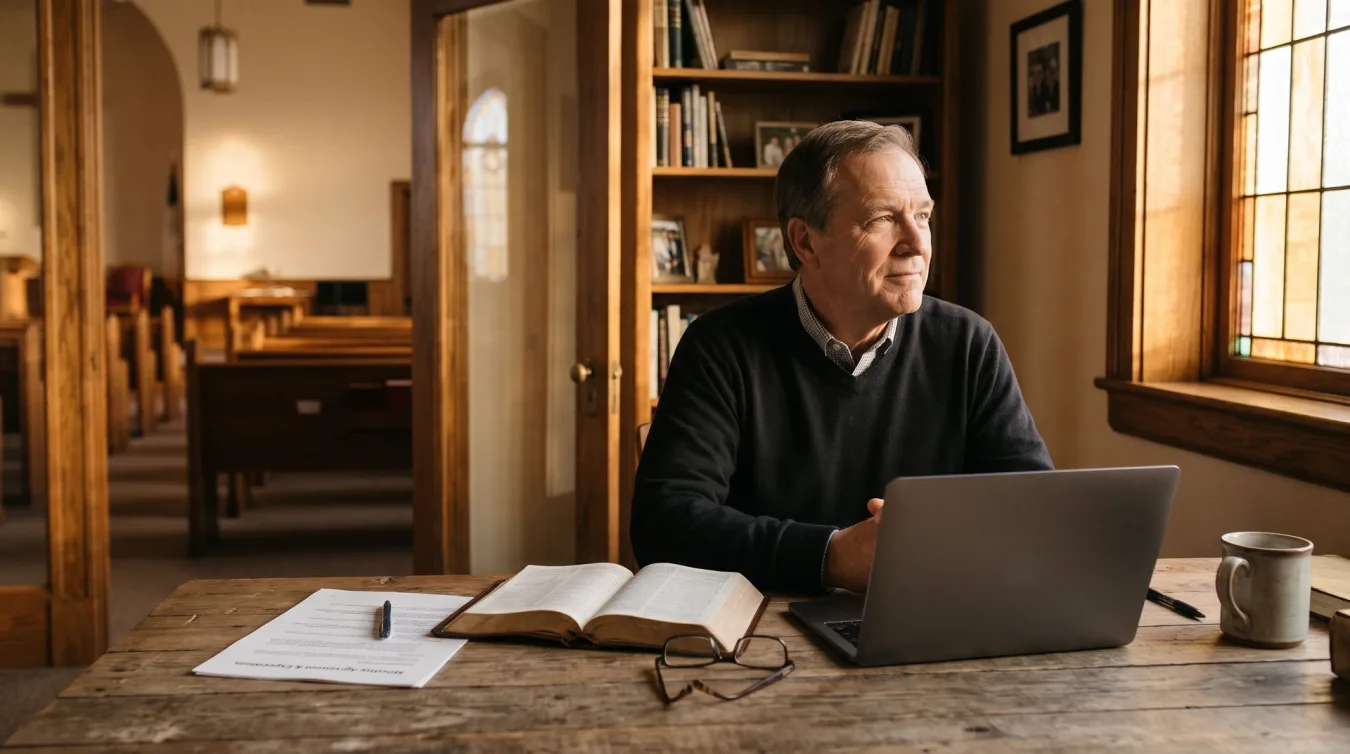
Church teams often spend the year in the same conference room, answering the same emails. A church workers retreat changes the room, and the conversation changes with it. Vanderbloemen has helped churches build their staff teams since 2009, and a healthy team starts with time spent together. The team getaway ideas below fit a full weekend or a single day, from icebreakers to a sample agenda. If the talks point to an open role, our team can help you find new church personnel. If they point instead to a strained team culture, a church staffing and culture assessment is a good next step.
Church Staff Retreat Explained
A ministry retreat is a planned getaway where a ministry team steps away from the workplace to pray, build trust, and work on shared goals. Most run from a half day to a full weekend, and many include an overnight stay at a retreat center or another quiet site. A staff meeting clears an agenda. A retreat also makes room for rest and relationships. Decide early whether you are planning a working retreat or a relationship retreat. A working retreat finishes a project away from the office. A relationship retreat sends the team home closer than it left.
Most teams choose from four common formats. Pick the one that matches your goal, budget, and calendar:
| Format | Length | Best For | Sample Focus |
|---|---|---|---|
| Half-day local retreat | 3 to 4 hours | A quick reset between busy seasons | One shared meal and one guided conversation |
| One-day offsite | 6 to 8 hours | A single goal, such as planning the fall calendar | Morning session, outdoor break, afternoon planning |
| Overnight stay | One night | Trust building plus a planning block | Dinner icebreaker, Saturday vision session, evening communion |
| Two-night weekend |
Two nights | A new team or a season of change | Worship, team challenge, strategy, rest |
Best Location for a Church Workers Retreat
The environment you choose sets the tone. Instead of another meeting room, think about places that spark creativity and rest.
- Retreat centers: Built for group gatherings, they usually offer meeting rooms, meals, and lodging in one place, which cuts down on coordination.
- Outdoor locations: Cabins, lake houses, and mountain lodges suit teams that want trails, fire pits, and quiet mornings.
- Local spaces: Members may offer a cottage, a ranch, or a large home at low or no cost, which suits a tight budget.
What to check before you book:
- Lodging and meals: Confirm whether meals are provided or your team cooks, and whether linens are included.
- Meeting space: Count the rooms you need for full-group and small-group sessions.
- Accessibility: Check ramps, bathroom access, and walking distances for every team member.
- Travel time: Keep the drive short enough that staff arrive rested.
- Contract: Get the price in writing, and ask about the deposit, which the University of Kansas Community Tool Box says is often 10% to 15% and non-refundable.
- Low-cost options: Member homes, state parks, and campgrounds often cost little or nothing. List site fees, lodging, meals, travel, and materials before you commit, and cook some meals together to trim catering costs.

Fun Church Retreat Activities That Build Bonds
Laughter breaks down rank and routine. Shared fun helps staff connect beyond ministry tasks. Popular church retreat activities include:
- Cooking challenges: Mix departments on each team for a pizza night, chili cook-off, or potluck, so people work with colleagues they rarely see.
- Outdoor adventures: A hike, a boat or canoe outing, mini-golf, a golf scramble, go-karts, or a scavenger hunt gives the team a shared challenge where titles matter less. Choose options everyone can join, and plan a low-key alternative for anyone who cannot.
- Team games: Relay races, card games, or board games bring out friendly competition and plenty of laughs.
- Service projects: Spend two hours cleaning up a local park or packing meals, so the team serves side by side.
- Skit night: Staff perform short skits about church life, and humor eases tension that meetings never touch.
- Evening gatherings: Songs and s’mores around a campfire wind the day down.
Benefits of a Staff Offsite for Ministry Teams
Church leaders and staff often juggle constant responsibilities, from Sunday services to community outreach. Without intentional time away, burnout and misalignment can creep in.
Barna’s January 2026 research report found that 24% of U.S. senior Protestant pastors had seriously considered leaving full-time ministry in 2025. That is down from 42% in March 2022. Barna’s research on pastors’ relationships also shows that those with stronger relational support are significantly less likely to consider leaving. A church staff retreat is one deliberate way to build that support. Here is what stepping away gives your team:
- Spiritual renewal: Time to pray and refocus on God’s presence, without sermon prep or phone calls.
- Team building: Shared meals and laughter let colleagues know each other beyond job titles.
- Vision alignment: A calm setting lets the team clarify goals, mission, and next steps together.
- Skill development: Add one short training or problem-solving block, and the retreat covers growth as well as rest.
When honest discussion meets real downtime, a team can come back rested and with a sharper sense of its work.
Icebreakers for Ministry Teams
Icebreakers work best when they are short and low pressure. Use one or two at the start of the first session:
- Personality types: Compare results from a tool your team already knows, such as the Enneagram or DISC. Ask each person what the result gets right and what it misses.
- Name stories: Each person explains where their name came from.
- Staff trivia: Mix church history questions with personal fun facts.
- Two truths and a lie: Each person shares three facts about their ministry path, and the group guesses the false one.
Build a Leadership Team That Leads with Purpose
Reach out today for a free consultation, and we will help equip your staff with the clarity, alignment, and support they need to serve well.
Start SearchStorytelling and Testimony Sharing in Your Next Retreat
Trust grows when people know each other’s stories. In The Five Dysfunctions of a Team, Patrick Lencioni names the absence of trust as a team’s first dysfunction and ties healthy trust to being open about weaknesses and mistakes. Stories give staff a safe way to practice that openness.
Try these approaches:
- “Turning point” testimonies where each person shares a defining faith moment.
- A shared playlist (“Soundtrack of My Life”) where everyone explains one meaningful song.
- Short bios or story pages distributed beforehand to help the team get to know each other.
- Send three questions in advance, such as what energizes you, what drains you, and what you need from the team, then share the summary at the opening session.
A few tips for leading story sharing:
- Give advance notice. Some people enjoy being put on the spot, and others feel real anxiety.
- Choose a trusted leader to go first, because the first story sets the tone.
- Prepare open-ended follow-up questions for anyone who needs help opening up.
- Agree that what is shared stays in the room.
These exercises invite honesty and build trust that lasts past the weekend.
Vision Casting and Strategy Sessions for Church Personnel

A strong agenda should also spark direction. A strategy block gives leaders a shared vision for the season ahead.
Examples of church leadership retreat ideas for vision alignment:
- Start, stop, continue: Each person lists one practice to start, one to stop, and one to keep, and the team groups the answers and votes.
- Calendar audit: Lay the past year’s events on a wall and mark which ones moved the mission forward.
- Working, stuck, missing, unclear: Make four lists. Begin with what is working and celebrate it. Then list what is stuck, what is missing, and what is unclear, and circle the top two items to tackle this season.
- Values check: Ask the team to name the church’s core values and describe what each looks like in a normal week. The gaps show where culture has drifted.
- Vision mapping: Create a shared picture of where God is calling the church in the next 3 to 5 years.
- Commitment cards: Each person writes one commitment for the next 90 days and shares it with a partner.
These discussions send leaders home with a shared direction and a clear next step.
Spiritual Renewal Practices for Church Workers
Every church retreat should include space for worship, prayer, and reflection. These church retreat activities make room for spiritual renewal:
- Prayer walks in nature.
- Journaling and guided reflection prompts.
- Silent time alone with Scripture.
- Group worship led by staff members.
- Communion or blessing services.
Leaders who get this time tend to carry more steadiness into the weeks that follow.
Sample Church Staff Retreat Agenda
A packed schedule leaves a team more tired than before. The Community Tool Box from the University of Kansas advises mixing group sessions with free time, so build the agenda around both.
Overnight Stay Schedule
This plan runs from Friday evening to Saturday evening, so staff is back for Sunday services:
- Friday evening: Arrive, share dinner, and open with one icebreaker.
- Saturday morning: Hold the main session, such as vision mapping or the four-lists conversation.
- Saturday midday: Break for lunch and unstructured time outdoors.
- Saturday afternoon: Share testimonies, run a team activity, or add a short training block.
- Saturday evening: Close with communion and write the one-page action plan.
One-Day Offsite
A one-day retreat still works if it happens off-site:
- Morning: Worship, then one vision or strategy session.
- Midday: Shared lunch and a walk or free hour.
- Afternoon: One team activity, then the action plan.
Half-Day Gathering
A half-day retreat suits a team that needs a quick reset:
- 9:00 AM: Pray together, then try a short getting-to-know-you question.
- 9:30 AM: Hold one guided conversation on your chosen theme.
- 11:30 AM: Share a meal and close with commitment cards.
Two-Night Weekend Schedule
This plan covers two nights. Run it Friday to Sunday if volunteers or a guest speaker can cover Sunday services, or shift it to midweek if not:
- Day 1, 5:00 PM: Check in, unpack, and eat together.
- Day 1, 7:30 PM: Warm up with a quick group game, then a short worship set.
- Day 2, 9:00 AM: Run the big working session of the weekend, such as start, stop, continue, or a calendar audit.
- Day 2, 12:00 PM: Break for lunch and unstructured time outdoors.
- Day 2, 3:00 PM: Run a team activity or a second working session.
- Day 2, 7:00 PM: Swap stories around a fire or a dinner table.
- Day 3, 9:00 AM: End with communion and commitment cards, then pack up by noon.

How to Plan a Staff Retreat for Your Church
To maximize the impact of your staff retreat:
- Start early: Begin planning two to four months ahead, and book popular sites first.
- Plan with purpose: Tie every session to one goal for the season.
- Balance structure and rest: Build a schedule, but leave room for reflection.
- Follow up: Set goals and accountability plans, then hold a small group check-in two weeks later. Tie them to your staff culture priorities.
Your Next Step Toward a Stronger Team
If you are organizing a staff retreat this year, think beyond schedules and venues. The best church leadership retreats create space for laughter, honest stories, shared vision, and spiritual renewal. When these elements come together, your team returns reconnected, motivated, and ready to serve with fresh purpose.
And if your staff retreat sparks deeper conversations about staffing or culture, Vanderbloemen can help. We specialize in church staffing solutions and church culture assessments designed to strengthen your ministry from the inside out. Contact us today!
Build a Stronger Church Staff Team
Vanderbloemen helps churches find mission-aligned leaders and strengthen staff culture. Talk with our team about your next hire.
Schedule a Free Consultation